

SAP S/4HANA® Group Reporting Data Collection
Efficient data collection for modern companiesSAP Group Reporting Data Collection: Functions and advantages
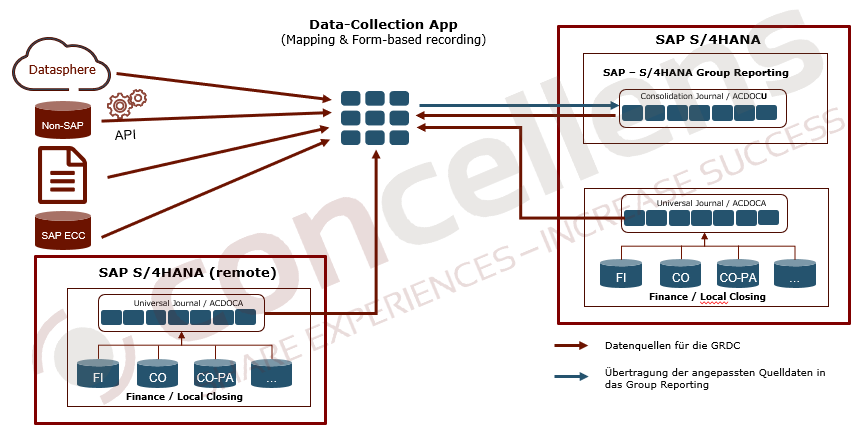
Companies that use SAP S/4HANA® for Group Reporting Companies often face the challenge of achieving the data quality and depth required for accurate and audit-ready consolidated financial statements. Group Reporting Data Collection (GRDC) offers a solution to this problem: It not only enables data integration between SAP and non-SAP systems but also supports the entire data collection process.
What is the SAP Group Reporting Data Collection (GRDC)?
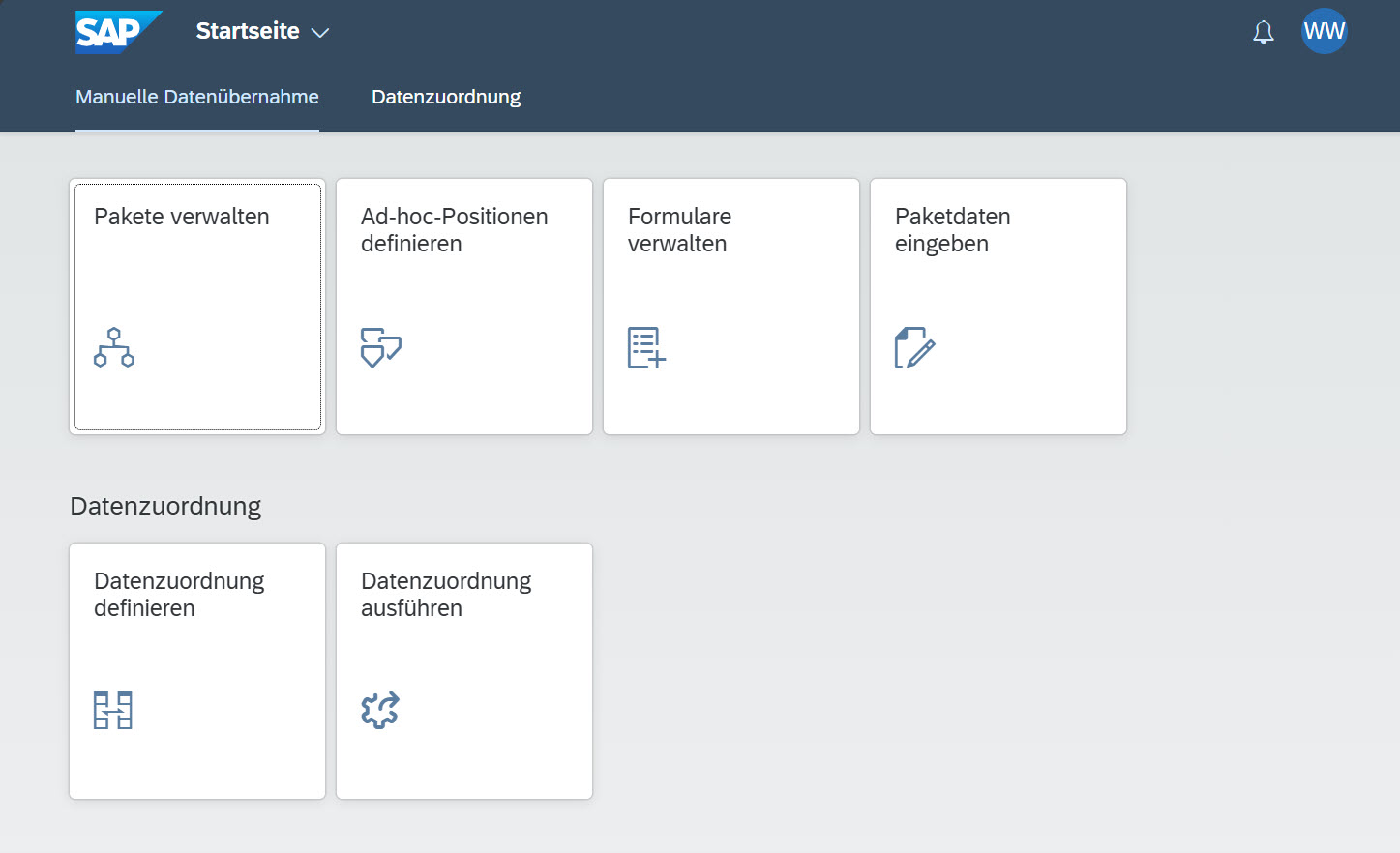
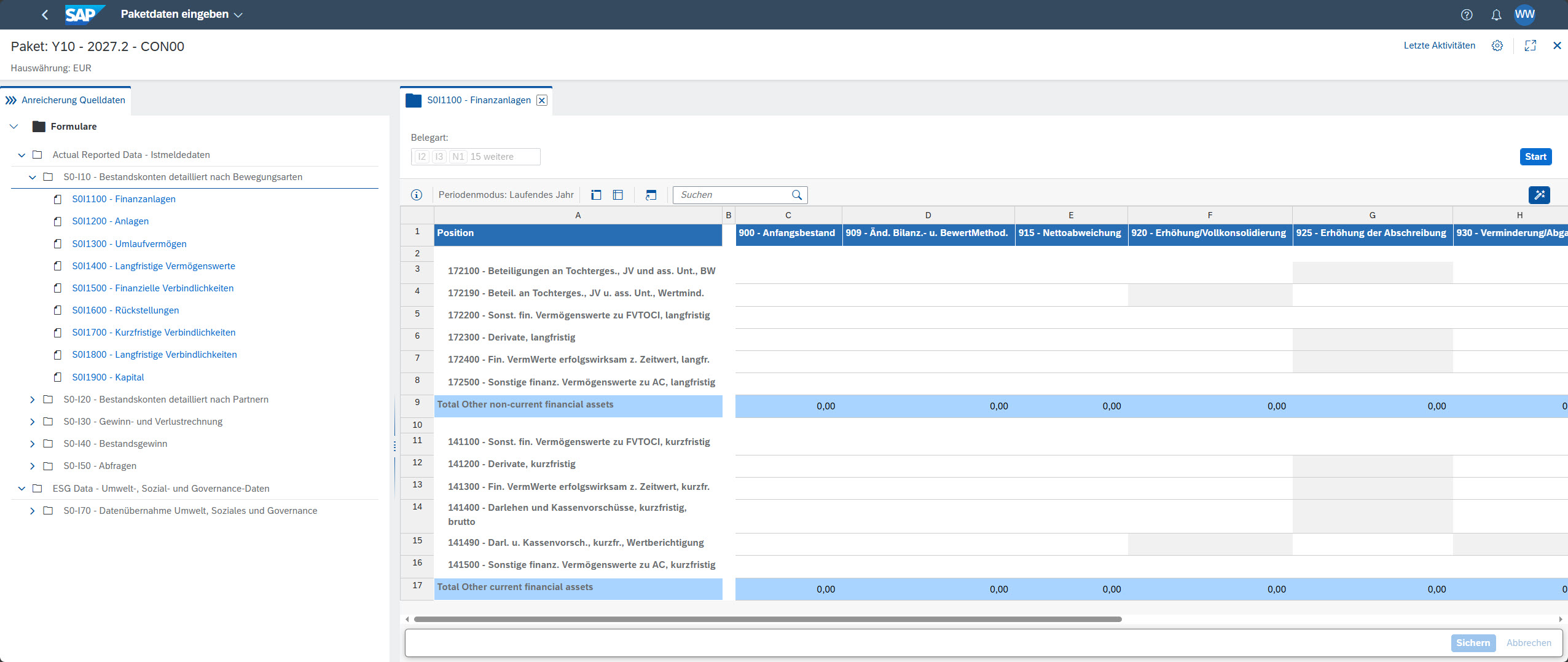
SAP Group Reporting Data Collection (GRDC) enables form-based data entry. This means that input masks can be created to enter data yourself. In Group Reporting, access to current information is crucial. The Data Collection also offers a display of real-time data that has already been posted to the database. The forms can be structured with formulas and other display options as required.
Practical example: Types of movement and mirror information
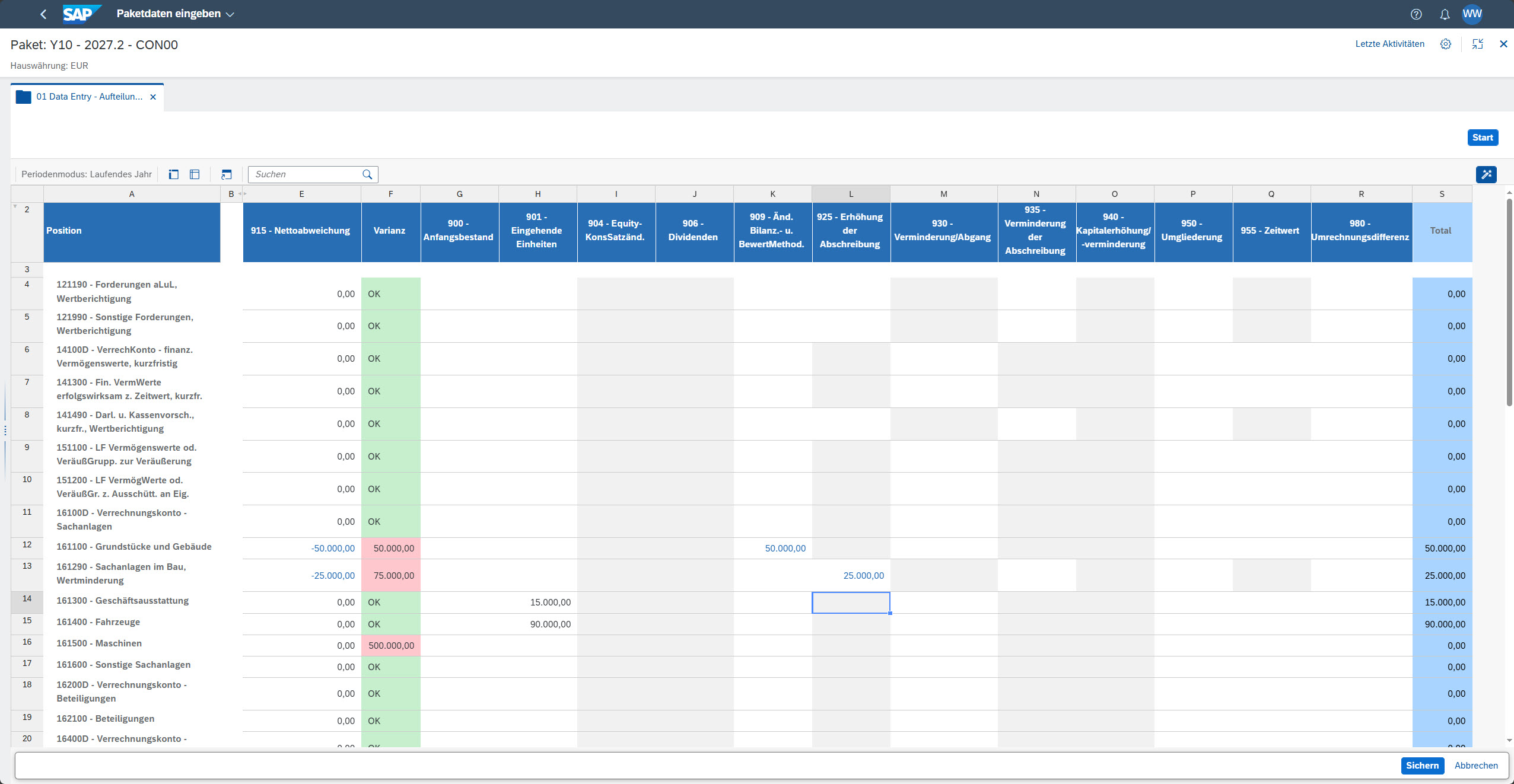
In order for consolidation to be carried out correctly, the data requires a certain level of detail. This requires, for example, a statement of changes in fixed assets with the various transactions. If this information is available in the upstream system, it can be transferred directly to Group Reporting.
However, this data is often missing in non-SAP systems. GRDC enables this information to be enriched manually and uses forms to ensure that the corresponding movements are assigned and mapped correctly.
What can the SAP Group Reporting Data Collection be used for?
GRDC is provided by SAP as a public cloud application to enable efficient and, above all, rapid group consolidation. To this end, companies connect their systems to the software, which acts as an additional data integrator. Data enrichment can be carried out via form-based entries. In this way, users are guided safely through the process without relevant information (such as transaction types) falling by the wayside. Data can thus be recorded faster and largely error-free, which is particularly useful for fast-close processes and tight time frames.
Your benefits with Group Reporting Data Collection (GRDC)
Better data quality and consistency
Incorrect or inconsistent data has potentially devastating consequences. Group Reporting Data Collection uses predefined rules and validations to ensure that the collected data is correct and consistent. Group Reporting Data Collection accesses the Group Reporting table (ACDOCU) directly and therefore always shows the data currently available in the database. This significantly increases data quality and minimizes inconsistencies. You can rest assured that your reports are based on reliable data.
More transparency and compliance
Transparency is crucial, especially in regulated industries. Group Reporting Data Collection offers comprehensive transparency across the entire data collection process. All data entries and changes are logged and can be traced.
This makes it much easier to comply with regulations and carry out audits. Companies can rest assured that their data is recorded securely and compliantly. In addition, different document types can be used when recording data. This means that data capture can be differentiated again separately and presented transparently.
Time and cost savings
Time and resources are precious in every company. Manual data entry often requires countless hours of work to compile and check data.
GRDC significantly reduces this burden. It allows employees to concentrate on strategic tasks and analyses instead of wasting time on time-consuming, repetitive tasks. This is made possible by the flexible input masks that can be created and the simultaneous display of real-time data. This leads to considerable time and cost savings and increases the efficiency of the company.
FAQ: The most frequently asked questions about SAP Group Reporting Data Collection (SAP GRDC)
With concellens: Choosing the Right SAP Setup
concellens is synonymous with excellent consulting services in corporate consolidation. We help you find the right SAP setup for your company. To do so, we rely on a clearly structured approach:
Preliminary Meeting
What systems and licenses are you currently using? What are your goals?
Strategic Workshop
Together, we’ll analyze the complexity of your group consolidation requirements and determine whether BCS/4HANA or Group Reporting is the best solution for you.
System Preview
In a demo system, we’ll show you live how the system works and what features you can expect. We’ll provide the necessary sample data for this.
Minutes of the Results
To help you make an informed decision, we will provide you with a detailed decision-making template that includes specific recommendations for action.
Why concellens?
With our expertise in SAP consolidation solutions and a clearly structured consulting process, we help you find the optimal solution for your needs—whether you’re migrating from a non-SAP system, streamlining your existing SAP environment, or implementing a completely new consolidation system.


Alexander Lindmüller
Senior Solution Architect

Philipp Benz
Project manager
Your Contacts
If your company is facing the challenge of introducing a new consolidation system or optimizing existing processes, arrange a non-binding preliminary meeting today. Let’s work together to ensure that your group consolidation is future-proof and efficient.
Unsere weiteren SAP-Lösungen in der Konzernsteuerung
SAP S/4HANA® Finance for group reporting
SAP S/4HANA Finance for Group Reporting ist eine leistungsstarke Lösung, die Unternehmen dabei unterstützt, Finanzdaten auf Gruppenebene effizient zu konsolidieren und zu analysieren.
SAP® Business Consolidation for SAP BW/4HANA
SAP BCS/4HANA optimiert die Unternehmenskonsolidierung mit einer robusten Plattform zur Finanzdatensammlung, -analyse und -berichterstattung.
SAP S/4HANA® Intercompany Matching and Reconciliation
SAP S/4HANA’s integrierte Lösung ICMR erleichtert konzerninterne Abstimmungen, macht den Prozess transparenter und automatisiert, und beschleunigt den Übergang zum Konzernabschluss.
SAP® Strategic Enterprise Management Business Consolidation System
SAP SEM-BCS optimiert Konsolidierungsprozesse, sammelt und analysiert Finanzdaten, erfüllt Compliance-Anforderungen und verbessert die Berichterstattung.
SAP S/4HANA® Group Reporting Data Collection
Die Group Reporting Data Collection App sammelt, analysiert und überträgt Daten ins Konsolidierungssystem, spart Zeit und Ressourcen und verbessert Berichte.
SAP® Business Planning and Consolidation
SAP BPC optimiert Finanzplanung, Budgetierung, Forecasting und Konsolidierung. Es verwaltet komplexe Finanzdaten, erstellt genaue Berichte und unterstützt fundierte Entscheidungen.
SAP® Enterprise Controlling and Consolidation System
EC-CS ist bei vielen SAP-Kunden stabil und bewährt. Mit der Einführung von S/4HANA stehen Kunden vor der Entscheidung, wie sie mit EC-CS weiter verfahren wollen, besonders im Brownfield-Ansatz und bei Nicht-S/4HANA-Kunden.
SAP Analytics Cloud®
SAP Analytics Cloud ist eine cloudbasierte Plattform für Unternehmensanalyse. Sie ermöglicht Datenanalyse, Business Intelligence, Planung und Prognose, um datengesteuerte Entscheidungen zu treffen und die Geschäftsleistung zu verbessern.
Unsere neuesten Artikel
Wissen

SAP® BCS/4HANA or SAP® S/4HANA Finance for Group Reporting: Which Consolidation Solution Fits Your Group Strategy?
Implementing or modernizing a consolidation solution is one of the most strategically important decisions in the finance department. It not only affects the Many corporations are currently facing a pivotal decision: What should their future consolidation architecture…

SAP® BCS/4HANA or SAP S/4HANA® Finance for Group Reporting? A Decision-Making Guide for CFOs on Choosing the Right SAP Consolidation System
Implementing or upgrading a consolidation solution is one of the most strategically important decisions in the finance department. It affects not only the consolidated financial statements, but also the quality of management information, the level of automation in…

SAP S/4HANA® Cloud Public Edition 2602.2 (HTC8)
With the release of SAP S/4HANA Cloud Public Edition 2602 and the associated hotfixes, SAP is consistently developing Group Reporting further. The focus is clearly on greater flexibility in rule definition, improved transparency in reporting and stronger integration…