
With the release of SAP S/4HANA Cloud Public Edition 2602 and the associated hotfixes, SAP is consistently developing Group Reporting further. The focus is clearly on greater flexibility in rule definition, improved transparency in reporting and stronger integration of business requirements into the cloud standards. For users, this means not only functional enhancements, but above all real progress in operational and functional work.
Especially in Group accounting, which is characterized by complex rules and regulations, increasing regulatory requirements and high time pressure, these further developments pay off immediately.
New "Manage Reporting Rules" app - reporting logic becomes much more flexible
One of the key innovations in the current hotfix is the introduction of the new "Manage Reporting Rules" app . It significantly expands the previous options for defining reporting rules. Reporting rules can now be provided directly with selection conditions without having to create separate selections. At the same time, existing selections from the "Define selections" app can be reused.
What is particularly relevant in practice is that up to six selection conditions can be maintained within a rule and the same dimensions and logical operators (AND/OR) are available as in the central selection logic. This allows significantly more complex technical requirements to be mapped cleanly and comprehensibly.
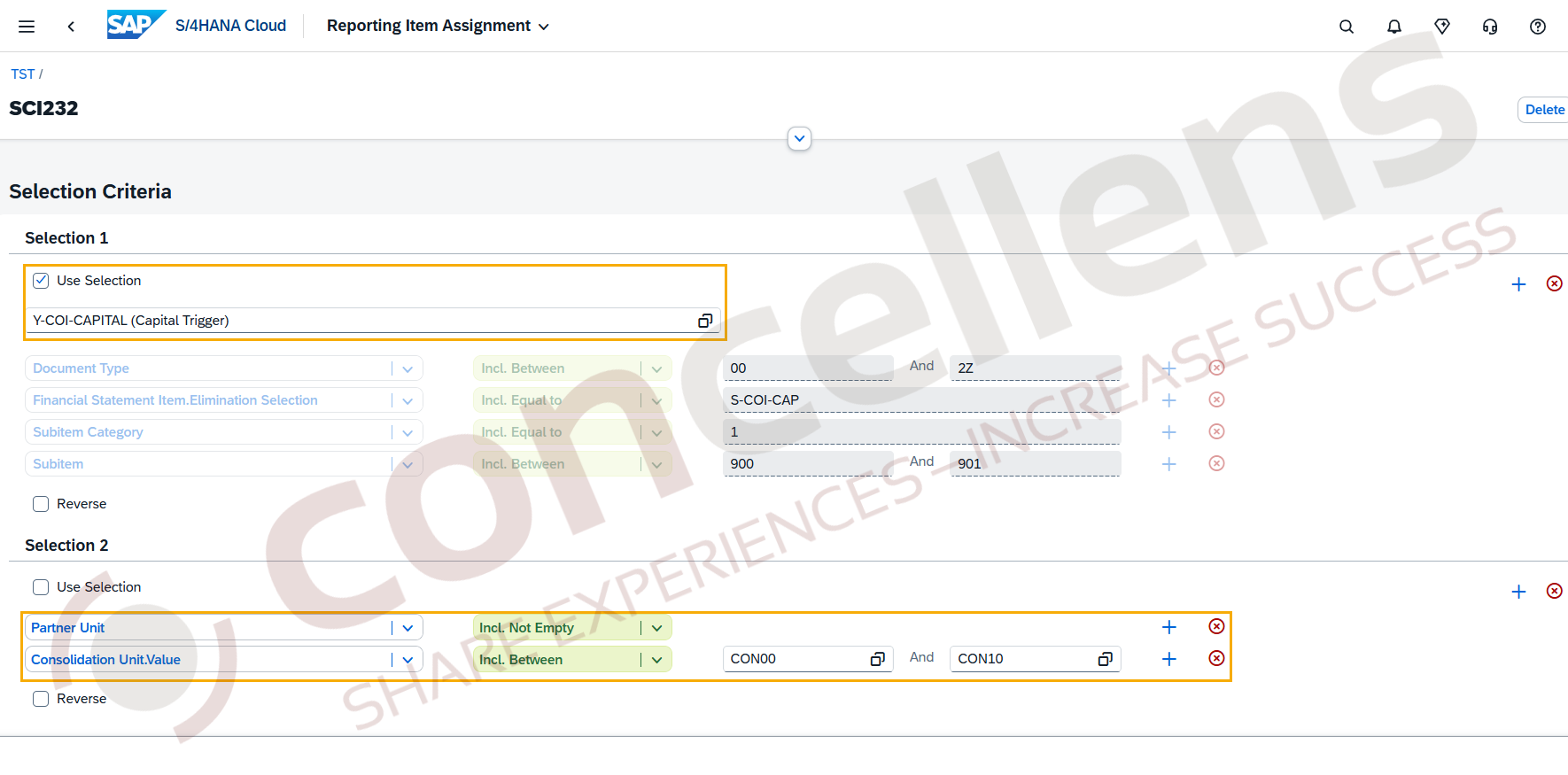
For users, this means fewer workarounds, fewer technical dependencies and noticeably greater flexibility - both in reporting and in the underlying rules and regulations. LinkedIn posts viewed.
Enhancements in the review booklet - more context, better analysis
The hotfix also introduced two new dimensions in the Group Financial Statements - Review Booklet: "Question" and "Predefined Answer". These are available in central reports such as the consolidated balance sheet, income statement (income statement and P&L) and cash flow statement.
This makes the Review Booklet more of a technical working tool and not just a pure display format. Technical questions, review notes or standardized answers can be stored directly in the reporting context. The dimensions are imported via the SAP Business Accelerator Hub using an API, which enables clean integration into existing processes.
The benefits for the user are obvious: reconciliations are more comprehensible, reviews are more structured and technical discussions are more firmly anchored in the system - a decisive step towards greater transparency in the consolidated financial statement process.
Extended conditions for automatic booking rules
Another important point concerns the automatic posting rules. The conditions for these rules have been expanded to include additional criteria, including key figures such as amounts in local currency, technical fields such as sub-items and attributes such as the local currency of a consolidation unit. In addition, these conditions can now be logically linked to each other.
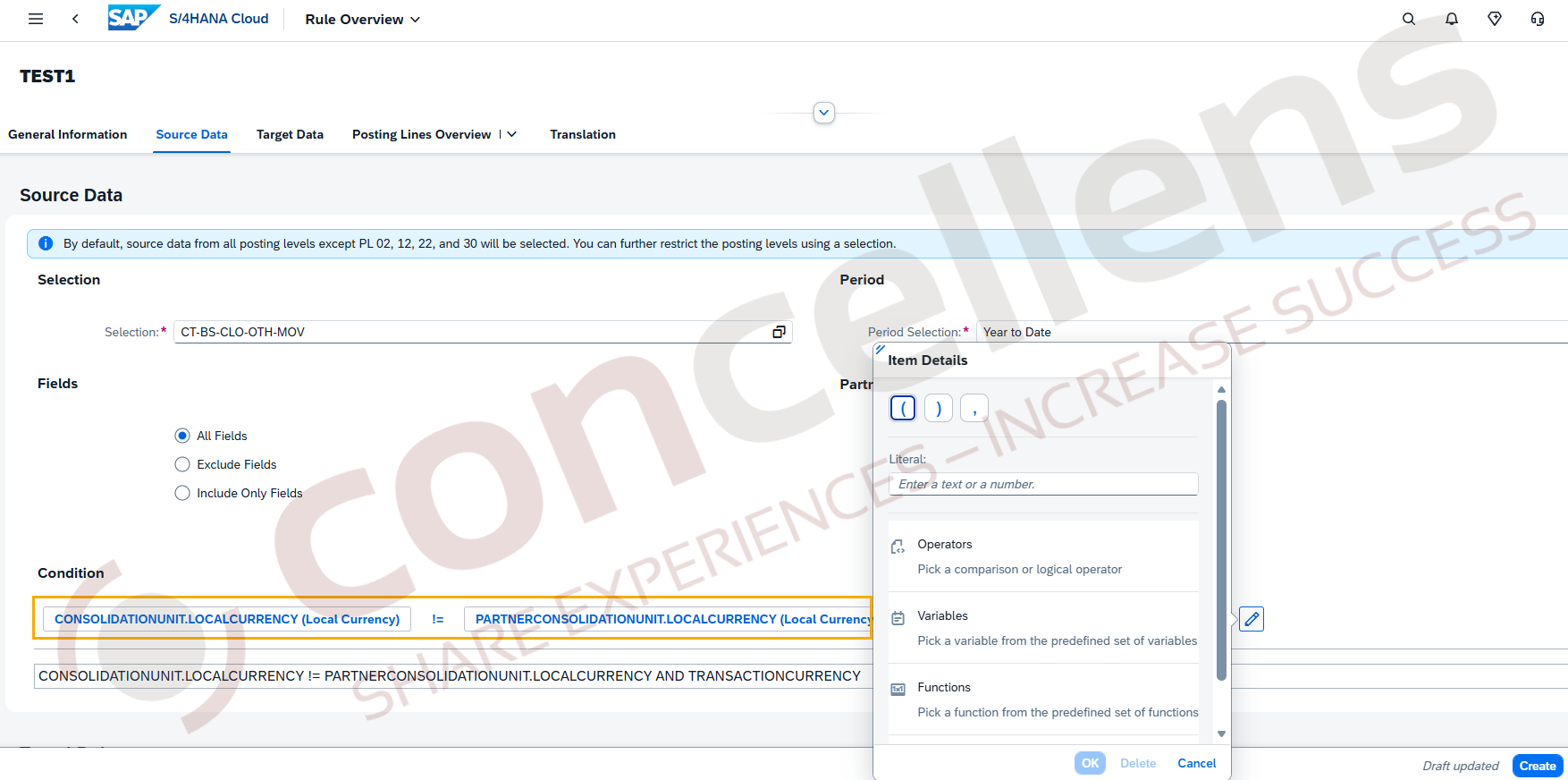
For complex group structures in particular, this opens up new possibilities for mapping posting logic much more precisely and accurately. At the same time, manual effort in the financial statements is reduced, as more issues can be processed automatically and rule-based.
In addition, the "Import Reported Data" app, which was previously available, is now standard in all systems for recording reporting and additional reporting data. This also strengthens the consistency and standardization of processes.
Why it is so important to stay up to date in the SAP Public Cloud
Another strength of SAP Group Reporting is its deep integration with SAP Analytics Cloud (SAC). This integration allows companies to analyze consolidated actual data directly and simultaneously incorporate planning, forecast or simulation results in the same data context.
While older BW-based solutions such as SEM-BCS, BCS/4HANA or SAP BPC have powerful planning and modeling functions, these functions remain trapped in a separate data world. SAP Group Reporting brings planning and consolidation data together in a common data model. This means that plan consolidations and strategic scenarios can be created directly on the same basis that is used for the actual financial statements.
This creates an integrated management platform on which CFOs can not only carry out retrospective analyses, but also model future-oriented decisions - whether in the context of M&A simulations, investment scenarios or currency model effects.
Conclusion
With Release 2602 and the latest hotfixes, SAP is once again demonstrating the extent to which Group Reporting in the public cloud is evolving. The functional enhancements directly address the daily challenges in Group accounting and offer users tangible benefits - professionally, technically and in terms of processes.
Anyone relying on SAP S/4HANA Cloud Group Reporting today should make targeted use of this innovation dynamic. Because this is precisely where one of the greatest added values of the public cloud lies: continuous improvement instead of stagnation.
Outlook: GRDC as the next evolutionary step in Group reporting
The current hotfixes relating to Release 2602 should not be viewed in isolation, but are part of a clearly recognizable further development of Group Reporting in the direction of GRDC (Group Reporting Data Collection). As discussed in the team, there are many indications that SAP is gradually creating the basis for deeper functional and technical integration.
It is already clear that new content - such as Questions and Predefined Answers - is not only available in the Review Booklet, but will also be made available via the SAP Business Accelerator Hub and corresponding APIs in the future. As a result, the Hub is increasingly becoming a hub for specialist content that goes beyond mere display and can be used across systems.
Predefined Answers in particular are currently still on the SAP roadmap for the second quarter of 2026. Even if no final date has yet been specified in the preliminary release information, the roadmap clearly shows the direction: GRDC is not only intended to support structured answers, but also to create the basis for greater standardization of technical content and make it available systematically.
The decisive added value for customers lies less in the individual feature and more in the overall picture: technical questions, standardized answers and, in the future, more free-form content are increasingly being integrated into the process instead of being maintained outside the system. This not only increases transparency in the consolidated financial statements, but also strengthens consistency across reporting, review and analysis.
Why this outlook is already relevant for you today
This GRDC outlook in particular makes it clear why it is important for customers to get to grips with the latest hotfixes at an early stage. The functions introduced today - such as the new dimensions in the Review Booklet or API-based provision via the Business Accelerator Hub - are not short-term individual measures, but building blocks of a long-term architecture.
Companies that actively support these developments create a stable starting point for future expansions. They avoid later disruptions in processes and can use new functions more quickly and in a more targeted manner as soon as they are productively available.
Hotfixes are the bridge to the next generation of Group Reporting
The hotfixes in the SAP S/4HANA Cloud Public Edition 2602 environment not only deliver short-term improvements, but also pave the way for the next evolutionary stage of Group Reporting. With the stronger role of GRDC and the SAP Business Accelerator Hub, it is clear where the journey is heading: more technicality in the system, more transparency in the financial statements and a closer integration of reporting, review and analysis.
For customers, this means that those who stay up to date today not only benefit immediately - but also invest in the future viability of their Group accounting system.